DPP InZicht project update: DPP news, insights and next steps (September 2026)
DPP InZicht project update: DPP news, insights and next steps (September 2026)
DPP InZicht follows the movement for you
The European DPP architecture is more and more taking shape. At the same time, important choices for fashion and textiles are still in development. In this first newsletter, we bring together the most recent, confirmed steps and translate them into what is relevant today for the user group.
DPP InZicht is a VLAIO TETRA project of Howest and Thomas More, in cooperation with MASJIEN and the sector partners Fedustria, Flanders DC, HERWIN, Creamoda and Vlaanderen Circulair. The project runs from October 2025 to September 2027 and helps Flemish SMEs in fashion and textiles to prepare in a practical way for the Digital Product Passport. → www.dpp-inzicht.be
Your input remains essential. Share questions, bottlenecks, examples or relevant initiatives with the research team. This way we keep the project close to the reality of the sector.
Join our DPP InZicht user group
Main section
Quick facts
/
17 July 2026: central EU DPP web page goes live
/
20 July 2026: EU DPP registry and test environment launched
/
16 September 2026: all eight European DPP standards published
/
Textile delegated acts now expected in Q3 to Q4 2027
/
At least 18 months of transition after adoption
New European milestones for the DPP
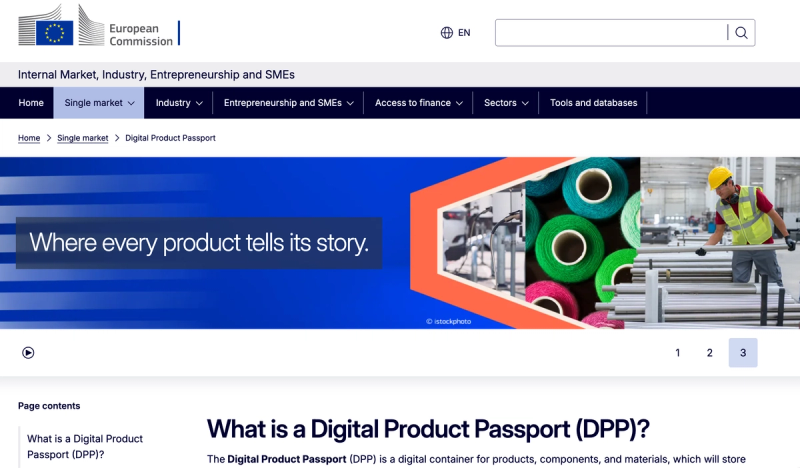
1. The central European DPP page is live
Since 17 July 2026, the European Commission has a central web page for the Digital Product Passport. It is now the official starting point for explanations, timelines, news, webinars, frequently asked questions and technical documentation.
The new page makes clear how the DPP will be introduced step by step, per product group. It offers separate information for economic operators, consumers, repairers and recycling companies, and public authorities. The content will be extended further as new regulation and technical guidelines become available.
Why this is relevant
- One official source to follow important changes and deadlines.
- A clearer difference between the horizontal DPP infrastructure and sector-specific requirements.
- Direct access to documentation about the registry, technical guidelines and future events.
→ Visit the central DPP page of the European Commission
Our advice: use the European page as the official reference, but for textiles, wait for the final sector-specific requirements before you consider data fields or technical choices as final.
2. Timing for textiles moves later
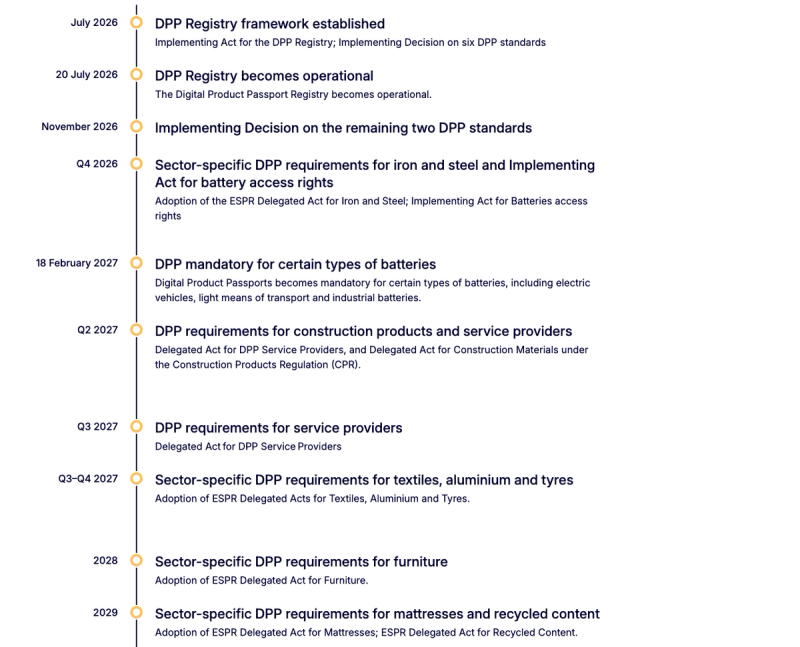
The planned adoption of the ESPR Delegated Acts for textiles is now in the third to fourth quarter of 2027. This is later than the earlier indication of the first half of 2027.
These delegated acts will set the ecodesign requirements and the sector-specific DPP obligations for textiles. After adoption, the Commission still plans a transition period of at least 18 months.
→ Read the European sector page for textiles and clothing
DPP InZicht shares this shift and the other relevant legal developments as an addition to the earlier shared report on legislation. That report is still available on the knowledge platform at www.dpp-inzicht.be.
3. The DPP registry is now operational
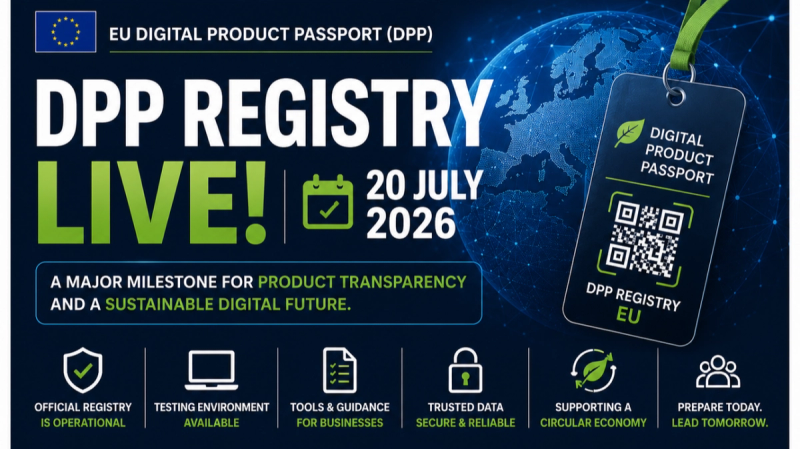
On 20 July 2026, the European Commission launched their central DPP registry, together with a test environment. With this, an important technical building block of the European DPP system is active.
The registry does NOT store the full product passport. It registers unique product identifiers, mandatory registration data and metadata. The full product information stays stored in a decentralised way, with the economic operator or a DPP service provider. Registration is possible through a user interface or through an API.
→ View information about the DPP registry
Please note: the final DPP requirements and data structure for textiles are not yet fixed. At the moment, the test environment only offers registration at item level, aligned with batteries. A fashion company can test the system and the workflow, but cannot yet register a final or compliant textile DPP.
3. New DPP Standards Published
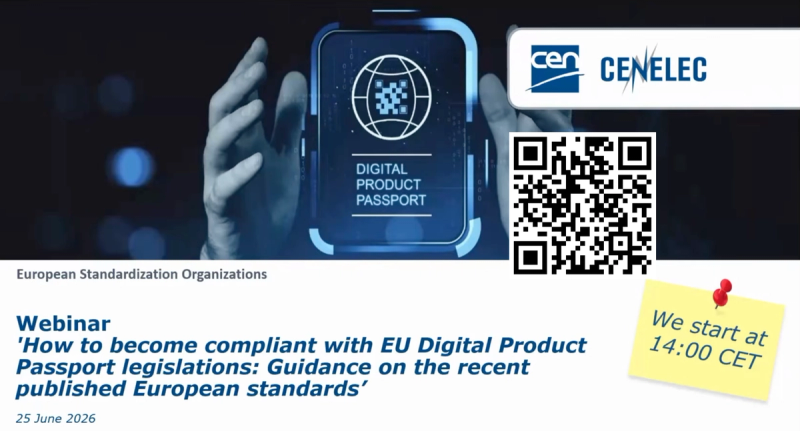
The eight DPP standards
On 16 September 2026, CEN and CENELEC published the second package of European standards for the Digital Product Passport. With this, the technical framework of eight DPP standards is complete.
Newly published:
- EN 18239:2026: management of access rights, information security and business confidentiality
- EN 18246:2026: authentication, reliability and integrity of data
These complete the six standards that were published earlier and are already cited in the Official Journal of the EU:
- EN 18216:2026: protocols for data exchange
- EN 18219:2026: unique identifiers
- EN 18220:2026: data carriers
- EN 18221:2026: data storage, archiving and persistence
- EN 18222:2026: APIs for the management and findability of DPPs
- EN 18223:2026: interoperability between systems
Important for fashion and textiles: these standards decide how the system must work technically. Which product information for textiles will be mandatory exactly will only be fixed in the future sector-specific regulation.
Learn more
- Watch the webinar about the eight DPP standards
- Information about buying the standards through national CEN and CENELEC members
- View the CEN-CENELEC page about DPP standardisation
- DPP Registry user guidelines
Within Work Package 4, we continue working on the DPP standards and semantics. The report with the most important insights will be shared soon. Do you have an urgent question or relevant input in the meantime? Feel free to share it with the research team.
Bottom section
Extra information to stay up to date
Watch again: Just Fashion webinar
In this webinar, the DPP was placed within a wider circular transition. It included a speaker from CEN CENELEC about the standards.
Watch again: DPP Festival Hilversum
The Dutch expertise centre DSC organised an event with presentations by, among others, Hema, Decathlon and Bol.com, but also GS1 and CIRPASS-2.
Other European DPP events
→ View upcoming European DPP events
About the project
- On the DPP InZicht platform, we collect reports, webinars, tools and examples, as always. For example, you can find the DPP toolkit for SMEs developed in WP3A, with a self-scan, an implementation roadmap and a stakeholder impact matrix.
- Soon we will share more about the report on legislation, the DPP as a communication tool, and the findings from work package 4 about semantic data, verifiable credentials and interoperability. We keep following European developments and only bring confirmed changes, with the right explanation for fashion and textiles.
Does your organisation have a use case, a concrete data question or an implementation challenge that can strengthen the research? Share it with us. Input from the user group helps decide where practical tools make the biggest difference.
Join the DPP InZicht guidance group
In a VLAIO TETRA call, Howest, Thomas More and Masjien joined forces to set up applied research on Digital Product Passports in the fashion and textile sector. This European legislation will come into force for everyone in the coming years, and the road towards it still raises many questions.
What is being researched?
Every company is different and needs a DPP strategy. How can the DPP guide the buying behaviour of consumers with clear, sustainable choices? A deep dive into the data that must be exchanged and made accessible, to understand how a DPP system can be used in an efficient and optimal way from a technology perspective.
Why take part?
In a TETRA project, the guidance group always plays an important role. It gives input and direction, so that the applied research matches the needs of the sector as closely as possible. The members are also involved in creating and testing the tools and methods that will be developed. Of course, there is also value for the participating companies:
- You get insight into possible DPP strategies.
- You are in the front row when the results are rolled out. They are freely available to the guidance group.
- You have direct access to the researchers for questions.
- You get a view of the landscape of DPP providers and related parties.
For whom?
- SMEs and large companies from the fashion, workwear and textile sector, including the full circular ecosystem.
- DPP solution providers and related parties.
Cooperation
This Flemish acceleration is only possible through cooperation. With you, and with our partners Fedustria, Creamoda, Flanders DC and HERWIN.
Participation cost
A TETRA call requires 7.5% co-financing. Depending on the number of participants, this comes down to:
- Start-ups and non-profit organisations: € 375 per year
- SMEs: € 1,050 per year
- Large companies: € 1,500 per year
Interested?
Fill in the registration form on the DPP InZicht website (the form is in Dutch), or contact Kushal Soni at kushal.soni@howest.be.
Do you know other companies that want to join the user group? Let us know.
Together we can accelerate the practical knowhow and experience of Digital Product Passports in Flanders!
Contributors
Authors
/
Ann Claes, Digital Product Passports Researcher
/
Patrick Van Renterghem, Community Builder @Cyber3Lab (AI + CyberSecurity + Web3 + Immersive Tech)
Want to know more about our team?
Visit the team page
Last updated on: 10/21/2026
/