5 CES 2026 tech products that improve citizen experience
5 CES 2026 tech products that improve citizen experience
CES 2026 made clear that Extended Reality is becoming lighter, more wearable, and more “city-ready.” For a project like X-CITE (building the CitiVerse and exploring how citizens can engage with places, services, and each other through immersive tech), the most interesting launches were not just “cool headsets,” but practical devices that can support participation, accessibility, safety, and on-site learning. Below are 5 CES 2026-released/showcased products that can inspire new citizen experiences.
Main section
Quick facts
/
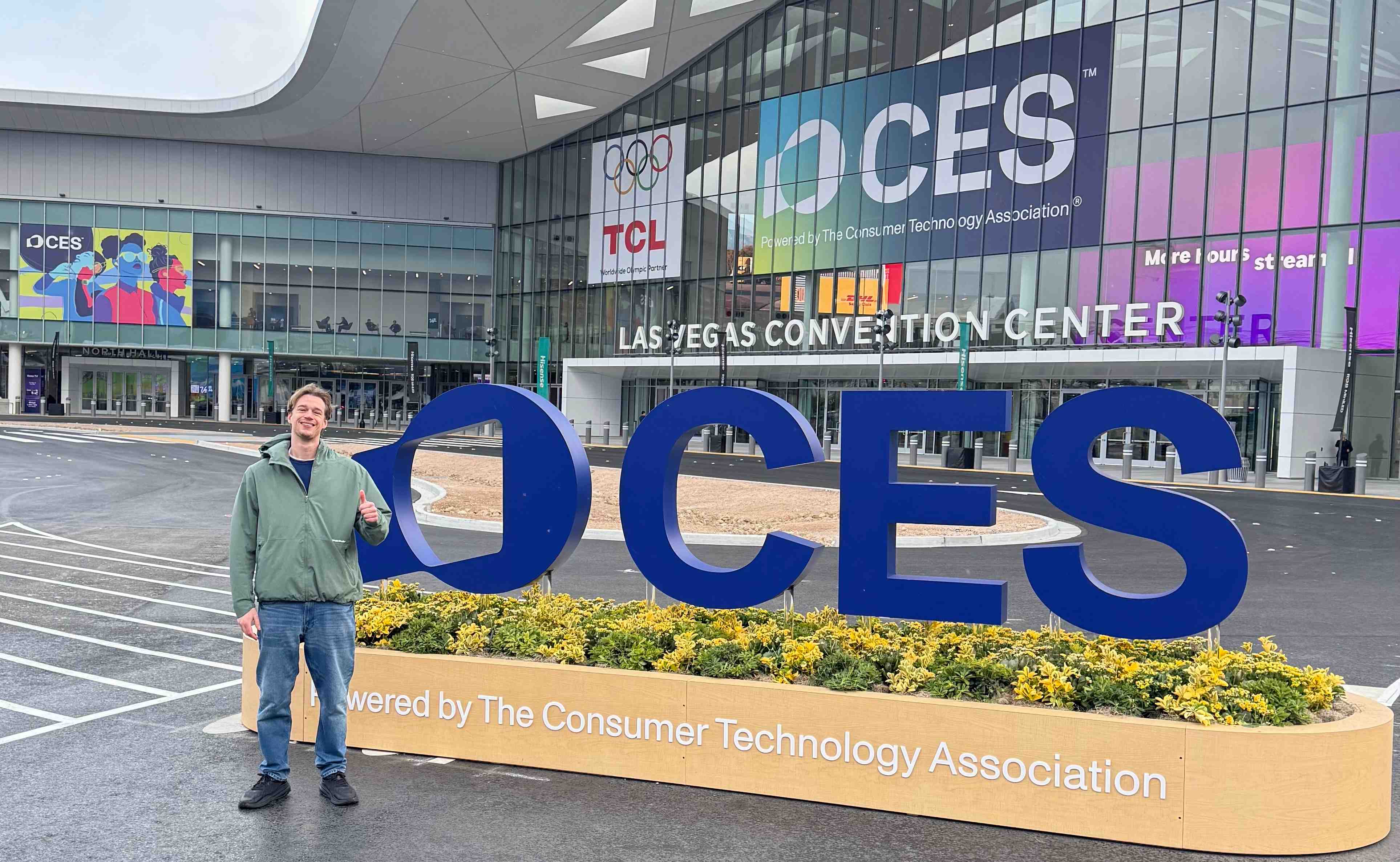
We visited CES 2026 in Las Vegas
/
The Most Powerful Tech Event in the World
Below are 5 CES 2026-released/showcased products that can inspire new citizen experiences.
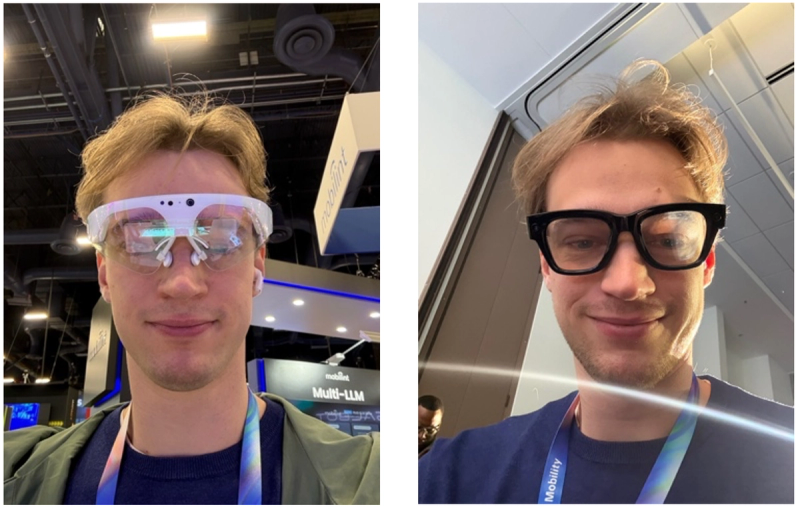
Smart AR glasses are becoming lighter, more powerful, and increasingly social; even panel speakers used Meta AR glasses as teleprompters.
Bottom section
5 CES 2026 tech products to improve the citizen experience
1) Samsung “Galaxy XR”/ Project Moohan (Android XR headset)
Samsung’s upcoming XR headset (Project Moohan) is highlighted by CES as a major spatial-computing innovation for 2026. The device can support immersive civic consultations, like walking citizens through a proposed redesign, comparing mobility scenarios, or exploring a digital twin together in a shared XR space. What differs this headset from other headsets is that Samsung is building it around Android XR (a more open platform), with Gemini as a core, context-aware assistant, plus tight Galaxy ecosystem integration and premium mixed-reality hardware choices like Micro-OLED displays and an external battery for better comfort.
2) XReal Smart Glasses
XREAL demonstrated how AR glasses are becoming increasingly useful in everyday life, including the XREAL 1S (affordable AR glasses with spec upgrades and even 2D-to-3D conversion, around $449) and the ROG XREAL R1, which XREAL showcased together with ASUS ROG (a “virtual large screen” up to 171 inches with 240Hz, designed to view content clearly and comfortably anywhere). This opens up interesting possibilities for citizens: think of a personal, portable info window for city tours, museums, and heritage sites (extra layers of information without a phone), accessibility via larger, more readable overlays and guidance, and participation where residents can view 3D plans or scenarios on location as if they were on a large screen, without the need for installation. Sources: XREAL 1S (The Verge) and ROG XREAL R1 (ASUS ROG)
3) Siemens Digital Twin Composer
Siemens’ Digital Twin Composer, unveiled at CES 2026, is a clear step toward what many call the industrial metaverse: instead of treating digital twins as static 3D models, it lets companies build photoreal, real-time “living” industrial worlds where AI, simulation, and streaming shop-floor data come together so teams can test decisions virtually before changing anything in the real world. In practice, that means designing and optimizing factories, processes, and even logistics flows inside a shared immersive environment (including NVIDIA Omniverse integrations), reducing silos between engineering and operations and helping organizations move from “simulate occasionally” to “operate continuously with a digital twin.”
4) Aqara Spatial Intelligence
Aqara’s “spatial intelligence” showcase at CES 2026is basically about making a room aware of what’s happening inside it. These sensors can help you understand things like how many people are present, where they spend time, and how they move through a space, so you can improve the setup based on real behavior rather than assumptions. It can also support safer and smoother citizen experiences by triggering helpful responses automatically (for example: guidance screens, lighting, notifications, or “start the experience when someone arrives”), without needing a heavy custom tech build.
Aqara’s spatial intelligence can make XR experiences feel more natural and “in the moment” by letting the environment respond to people automatically. Instead of asking citizens to scan QR codes, tap buttons, or follow instructions, the space can detect when someone arrives, where they pause, and how groups move and then trigger the right XR content at the right time (welcome moment, guided path, language or accessibility support, or a collective AR scene for a group). It also helps expand the experience after the demo: you can learn what actually worked (which scenes people engaged with, where they got stuck, how long they explored) and improve the next iteration, making XR-pilots more inclusive, smoother, and more impactful for real citizens.
5) HyperX neurotechnology-powered headset
Something more experimental is the Neurable × HyperX brain-sensing headset prototype, which uses built-in sensors to estimate focus and cognitive load in real time. For x-CITE, that could add a unique research layer on top of XR pilots. Helping you see where citizens are engaged vs. overwhelmed, compare experiences objectively, and explore XR that adapts (more guidance, slower pacing, different content) when the data suggests confusion or fatigue, with clear consent and privacy safeguards.
The technology is there, now it's time to explore what really works for citizens: accessible, understandable, and security. We incorporate these insights into our research projects to make citizen experiences tangible with XR. Would you like to contribute your ideas or test our products? Feel free to send us a message.
More on the x-CITE project: https://xcitecitiverse.eu/
Contributors
Authors
/
Cesar De Greve, Creatieve Technoloog
Want to know more about our team?
Visit the team page
Last updated on: 1/14/2026
/